
Find Relief with Shockwave Therapy

by Leann Boehm and Jollyn Reyes.

Chronic pain can affect every aspect of your life, limiting movement, disturbing sleep, and keeping you from the activities you love. If you've been dealing with pain that hasn’t responded to traditional treatments, shockwave therapy may be the breakthrough you’ve been waiting for. This modern, non-invasive approach is helping people of all ages get back on their feet faster, and it’s now available right here at Southeast Physiotherapy.
What is Shockwave Therapy?
Shockwave therapy—technically known as Extracorporeal Shockwave Therapy (ESWT)—uses controlled acoustic (sound) waves to target damaged tissue. These waves stimulate the body’s own repair mechanisms, increasing blood circulation, reducing inflammation, and triggering regeneration at the cellular level.
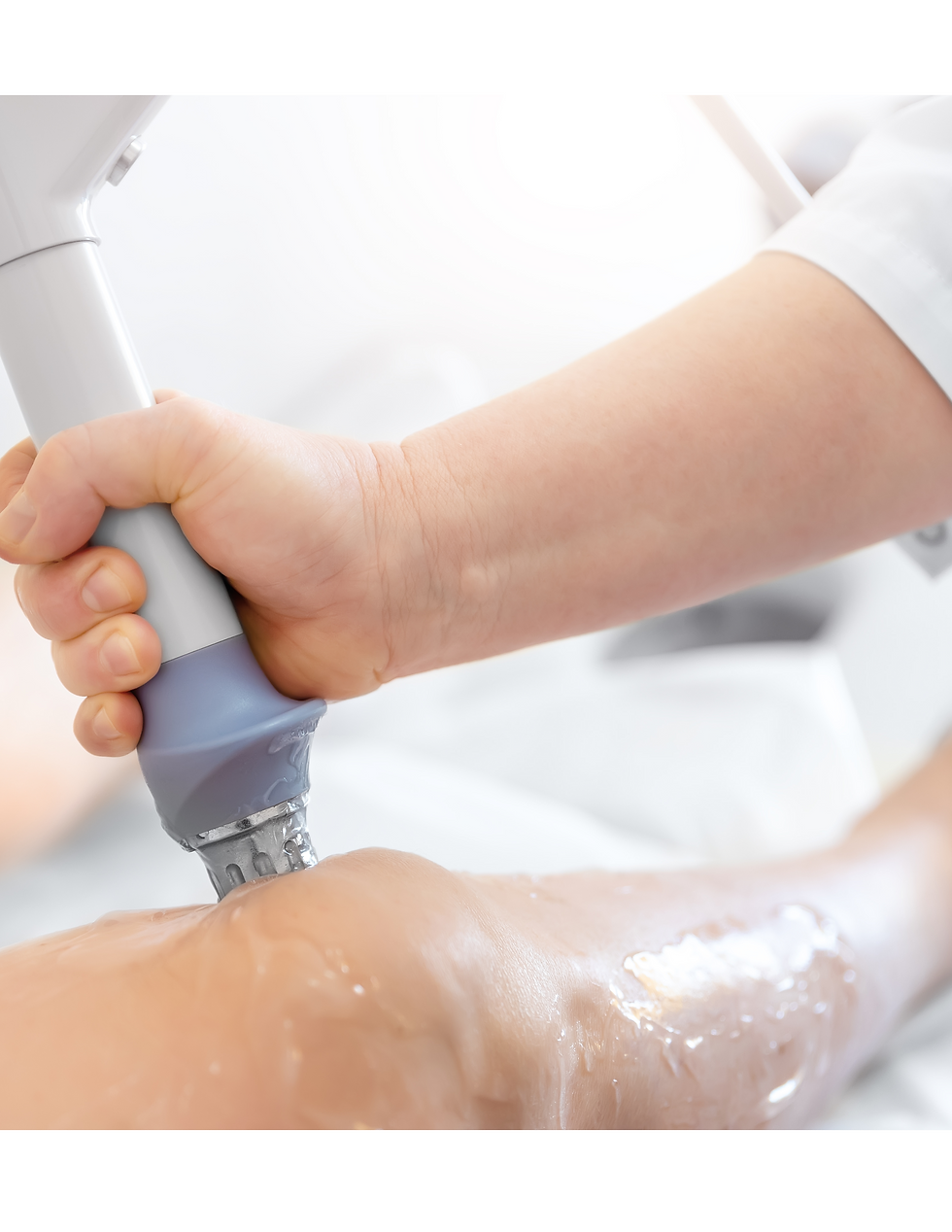
Delivered through a handheld device, the treatment sends focused pulses to the injured area, creating microscopic stress that kickstarts healing. It’s especially effective in areas where poor blood flow or scar tissue have slowed recovery. Treatments typically last 15–20 minutes and require no medication, no injections, and no downtime.
Most patients begin to feel improvements within 3 to 5 sessions, depending on the condition being treated.

Conditions We Treat with Shockwave
Shockwave therapy is ideal for stubborn injuries and chronic conditions such as:
Plantar Fasciitis (heel pain)
Tennis or Golfer’s Elbow
Achilles Tendinopathy
Calcific Shoulder Tendinitis
Patellar Tendinopathy (Jumper’s Knee)
Hip or Gluteal Pain
Shin Splints and other repetitive strain injuries
If you're tired of temporary solutions, shockwave therapy offers a lasting, research-supported option for recovery.

The Science Behind It
Shockwave therapy is well-supported by research and clinical evidence, making it a trusted treatment for chronic musculoskeletal conditions.
A 2020 systematic review and meta-analysis published in BMC Musculoskeletal Disorders by Al-Abbad et al. evaluated the effectiveness of extracorporeal shockwave therapy (ESWT) across a range of musculoskeletal disorders. The authors found that ESWT significantly improved pain and function in patients with conditions such as plantar fasciitis, Achilles tendinopathy, and calcific tendinitis. The therapy was shown to promote tissue healing, enhance circulation, and positively alter the structure of damaged tendons (Al-Abbad et al., 2020).
Further evidence comes from a 2015 systematic review published in the British Medical Bulletin by Schmitz and colleagues. This comprehensive review of studies listed in the PEDro database confirmed the efficacy and safety of ESWT, reporting success rates between 65% and 91% across various orthopedic conditions. The authors emphasized that ESWT is a non-invasive, low-risk treatment with significant clinical benefits—particularly for patients with chronic, treatment-resistant pain (Schmitz et al., 2015).
These findings reinforce what we observe in the clinic: shockwave therapy is a reliable, science-backed treatment that helps reduce pain, restore mobility, and avoid surgery.

Why Patients Choose Shockwave
Patients often come to shockwave therapy after trying multiple treatments without long-term relief, and are surprised by how effective and efficient it is. Here’s why shockwave therapy has become a preferred option for both therapists and clients:
✅ Non-Invasive & Drug-Free
Shockwave therapy doesn’t require injections, surgery, or medication. It stimulates the body’s natural healing process without adding chemicals or requiring recovery time. For people who want to avoid pharmaceuticals or surgical intervention, this makes it a safe and appealing choice.
✅ Fast & Convenient Appointments
Each session takes just 15–20 minutes and is done right in the clinic—no hospital visits or downtime required. Most patients resume regular activities immediately afterward, which makes it easy to fit into a busy schedule.
✅ Clinically Proven Results
Extensive research supports shockwave therapy’s effectiveness, with success rates ranging from 65% to 90% depending on the condition. Many patients notice reduced pain and increased function within just a few sessions.
✅ Targets the Root Cause
Rather than masking symptoms, shockwave therapy treats the source of pain by increasing blood flow, breaking down scar tissue or calcification, and accelerating tissue repair. It’s especially effective for chronic injuries that haven’t responded to rest or rehab alone.
✅ Minimal Side Effects
Shockwave therapy is well-tolerated, with most patients experiencing only mild discomfort or redness during or shortly after treatment. Unlike medications or surgery, there’s little risk of adverse effects or long recovery periods.
✅ Used by Top Sports Clinics Worldwide
Elite athletes, runners, and weekend warriors alike have turned to shockwave therapy for fast and lasting results. It’s trusted in sports medicine clinics around the world—and now it’s available right here in your community.
Whether you’re dealing with stubborn heel pain, shoulder stiffness, or overuse injuries, shockwave therapy can help you get back to doing what you love—without the wait, the pills, or the surgery.
Curious if it’s right for you? Let’s talk.
Ready to prioritize your health? Book a no-obligation discovery now!
Take the first step towards scheduling your Discover Visit! It's easy to secure your spot.
Frequently Asked Questions
How is it different from other physiotherapy modalities?
Shockwave therapy (SWT) uses high-energy sound waves to stimulate tissue healing at the cellular level, especially in chronic or stubborn soft tissue injuries. It is particularly effective in cases involving calcifications or stable fractures, where other treatments may have limited impact.
Is Shockwave Therapy (SWT) safe?
Yes. SWT is Health Canada-approved and safe when administered by trained professionals. Side effects are minimal and temporary, and numerous peer-reviewed studies support its effectiveness.
Who is a good candidate for SWT?
Ideal candidates have chronic tendon or soft tissue injuries that haven’t improved with rest, medication, or traditional therapy. It’s especially helpful when progress with conservative care has plateaued.
What does a typical SWT session look like?
A handheld device is applied to the affected area, delivering controlled acoustic pulses for about 5–12 minutes. It can be loud, so earplugs are available if needed.
How many Shockwave Therapy sessions will I need?
While protocols often recommend 6–10 weekly sessions, some clients feel improvement after just 2–3.
Does SWT hurt?
Some discomfort is normal and depends on the area being treated. Clients often describe it as a “tapping” or “flicking rubber band” sensation. There can be discomfort, depending on the condition.
Will I need to take time off work or stop activities?
No downtime is required. However, avoid ice, heat, or topical creams for 1–2 days. Mild bruising, soreness, or redness may appear within 1–3 days post-treatment.
How soon will I see results?
Some feel relief after the first session, while others may take up to three sessions for noticeable improvement.
Can Shockwave Therapy help with long-standing or chronic pain?
Yes, shockwave therapy works best for chronic conditions that haven’t responded to other treatments.
Can SWT help avoid surgery?
Yes. Shockwave may reduce pain and improve function enough to delay or prevent surgery. Shockwave can treat and resolve conditions like calcific tendinitis, avoiding the need for surgical intervention. See also Gerdesmeyer et al., 2008. “Radial extracorporeal shock wave therapy is safe and effective in the treatment of chronic recalcitrant plantar fasciitis.” The American Journal of Sports Medicine, 36(11), 2100–2109.
Can Shockwave Therapy be combined with other treatments?
Absolutely. Shockwave therapy works well alongside manual therapy, exercise, education, and lifestyle modifications as part of a complete rehab plan.
Ready to prioritize your health? Book a no-obligation discovery now!
Take the first step towards scheduling your Discover Visit! It's easy to secure your spot.
References
Al-Abbad, H., Allen, S., Morris, S., Reznik, J., Biros, E., Paulik, B., & Wright, A. (2020). Effectiveness of extracorporeal shockwave therapy in the treatment of musculoskeletal conditions: A systematic review and meta-analysis. BMC Musculoskeletal Disorders, 21, 1–12. https://doi.org/10.1186/s12891-020-03270-w
Schmitz, C., Császár, N. B. M., Milz, S., Schieker, M., Maffulli, N., Rompe, J. D., & Furia, J. P. (2015). Efficacy and safety of extracorporeal shock wave therapy for orthopedic conditions: A systematic review on studies listed in the PEDro database. British Medical Bulletin, 116(1), 115–138. https://doi.org/10.1093/bmb/ldv047
Leann and Jollyn are experienced physiotherapists at Southeast Physiotherapy, bringing a combined passion for evidence-based care and personalized treatment. With advanced training in shockwave therapy and a deep understanding of chronic pain and musculoskeletal injuries, they’ve helped hundreds of clients find relief where other treatments have failed.
Leann, a senior therapist and clinic founder, has over 20 years of clinical experience and a special interest in treating persistent pain using innovative, non-invasive techniques. Jollyn brings a unique global perspective to her practice, with hands-on experience treating patients in both the Philippines and Canada. Her compassionate approach and clinical skill make her a trusted provider for those recovering from complex injuries.
Both therapists are committed to helping you feel stronger, move better, and get back to the life you enjoy, with expert guidance every step of the way.

Comments